Max Hospital Delhi Performs India’s First Robot-Guided Medial Pivot Knee Replacement
Max surgery used an active robotic system capable of independently executing pre-programmed movements, unlike earlier passive robotic tools, making this a claimed global first of its kind.
Doctors at Max Super Speciality Hospital, Saket, have performed India’s first robot-assisted cementless medial pivot knee replacement, marking a major advancement in joint replacement surgery.
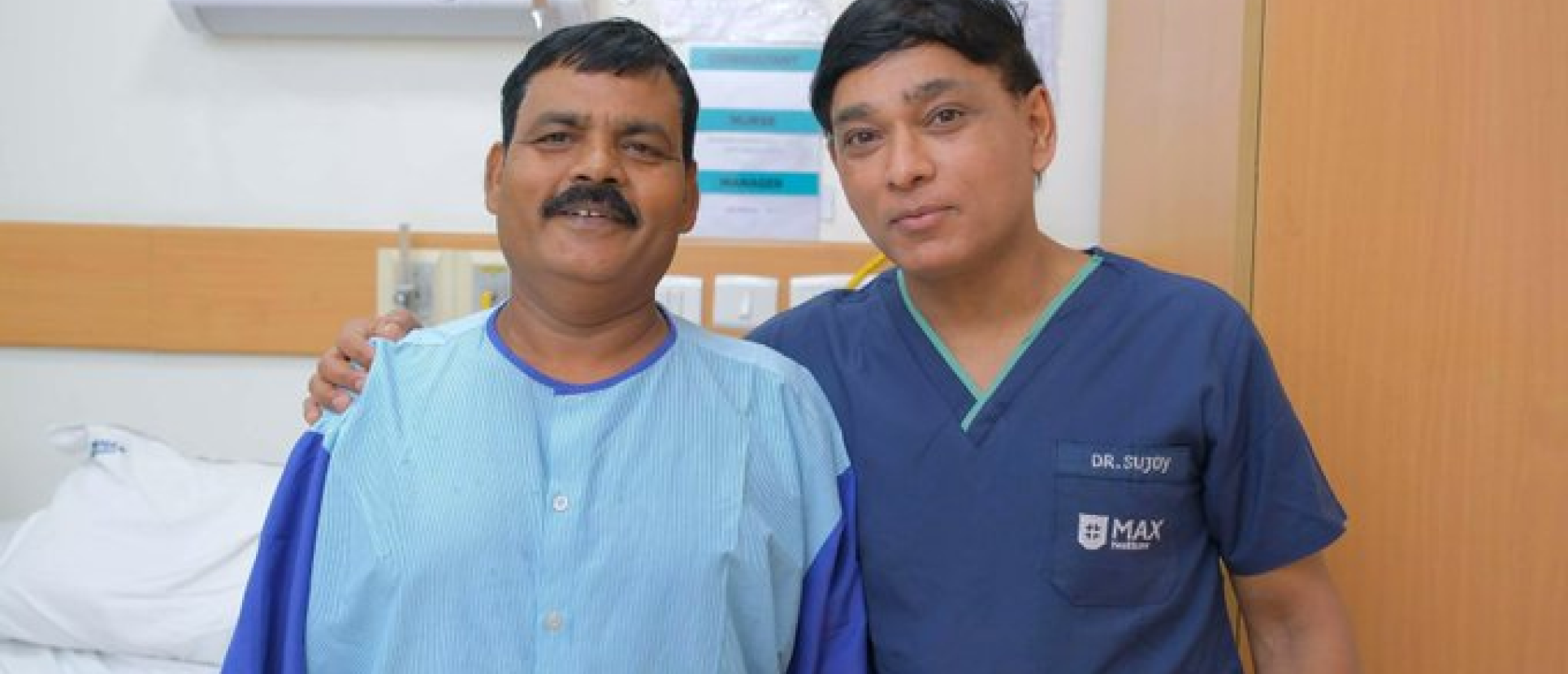
The procedure was conducted on a 54-year-old patient from Jharkhand suffering from advanced osteoarthritis and severe knee deformities. Led by Dr Sujoy Bhattacharjee, chairman of the Max Institute of Robotic Joint Replacement, the surgical team used a CUVIS robotic system for precision implant placement, preserving key knee ligaments.
“We use markers and trackers to guide the robot during surgery,” said Dr Bhattacharjee, adding, “That’s the beauty of robotic surgery; it’s precise, evidence-based and fully trackable.”
Unlike traditional cemented implants, this technique allows the patient’s bone to naturally grow into the titanium implant, offering better long-term integration and faster recovery.
“The procedure is quicker because it eliminates the 12-15 minutes needed for cement to set. In bilateral knee replacements, this alone can save nearly 25 minutes,” he noted.
While global records show Smith+Nephew’s 2022 cementless robot-assisted knee replacement in the US, Dr Bhattacharjee clarified that the Max surgery used an active robotic system capable of independently executing pre-programmed movements, unlike earlier passive robotic tools, making this a claimed global first of its kind.
Dr Ankush Sharma, part of the team, explained the biological advantage: “The patient’s bone grows into microscopic pores on the implant, locking it naturally. Over 10 to 20 years, cement bonds can weaken, but bone bonding significantly reduces that risk.”